
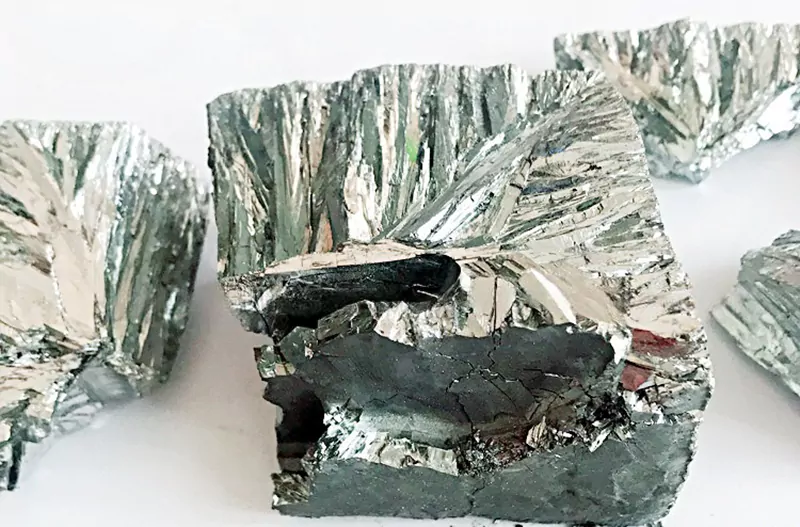
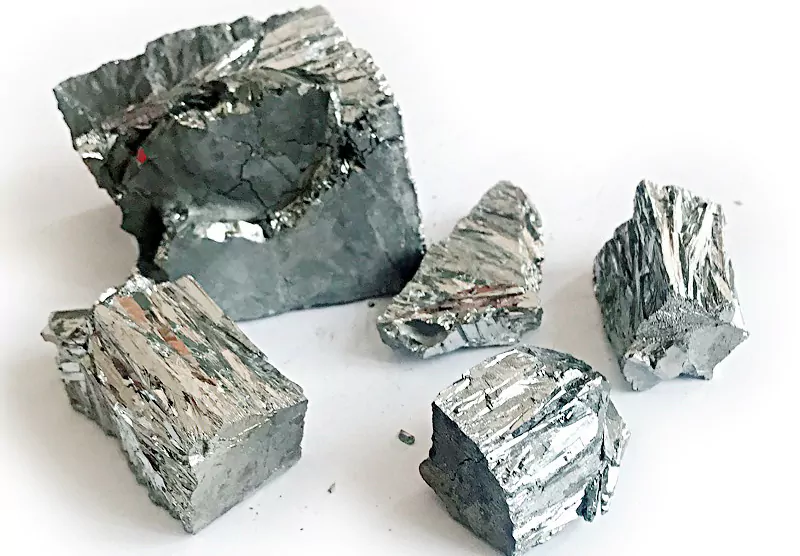
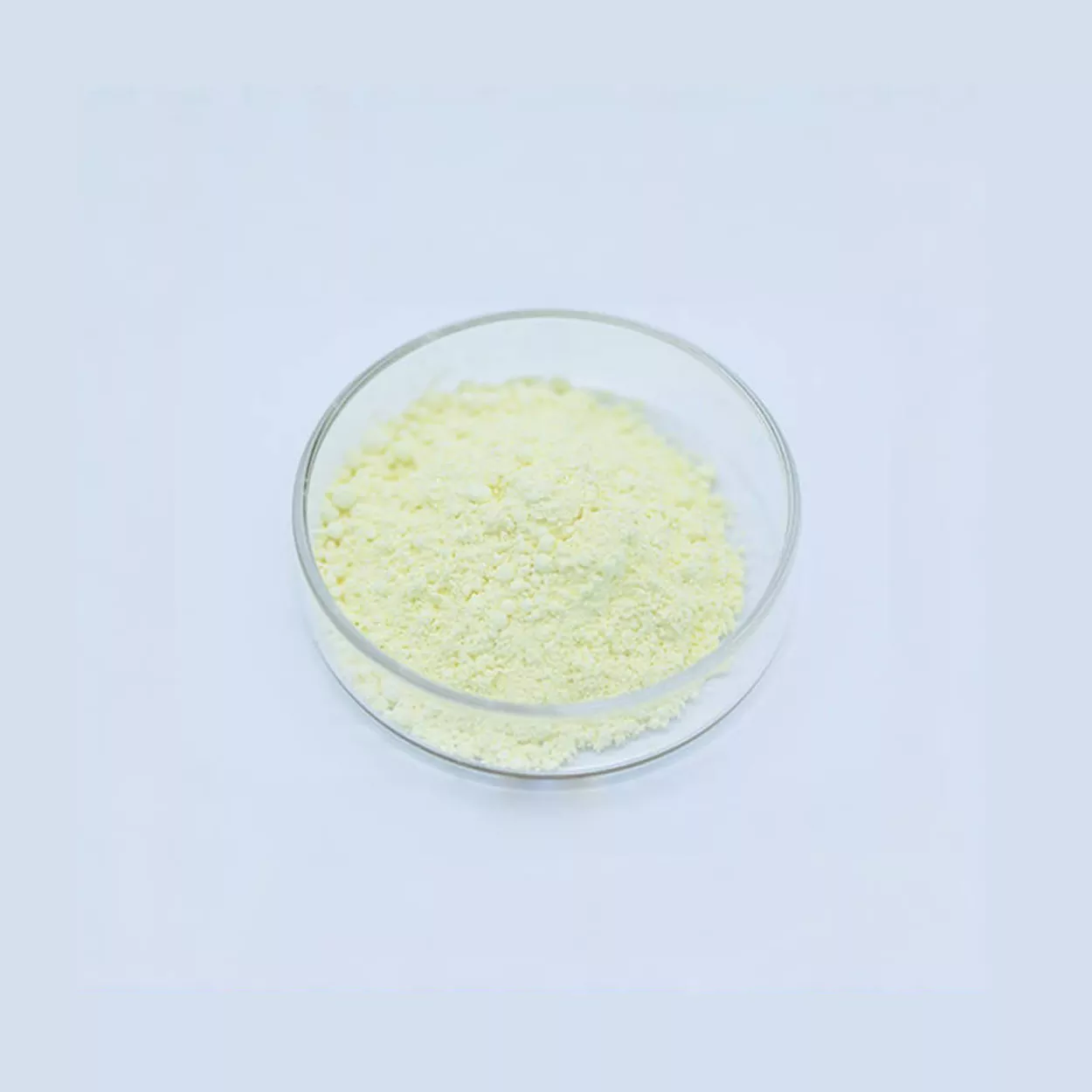
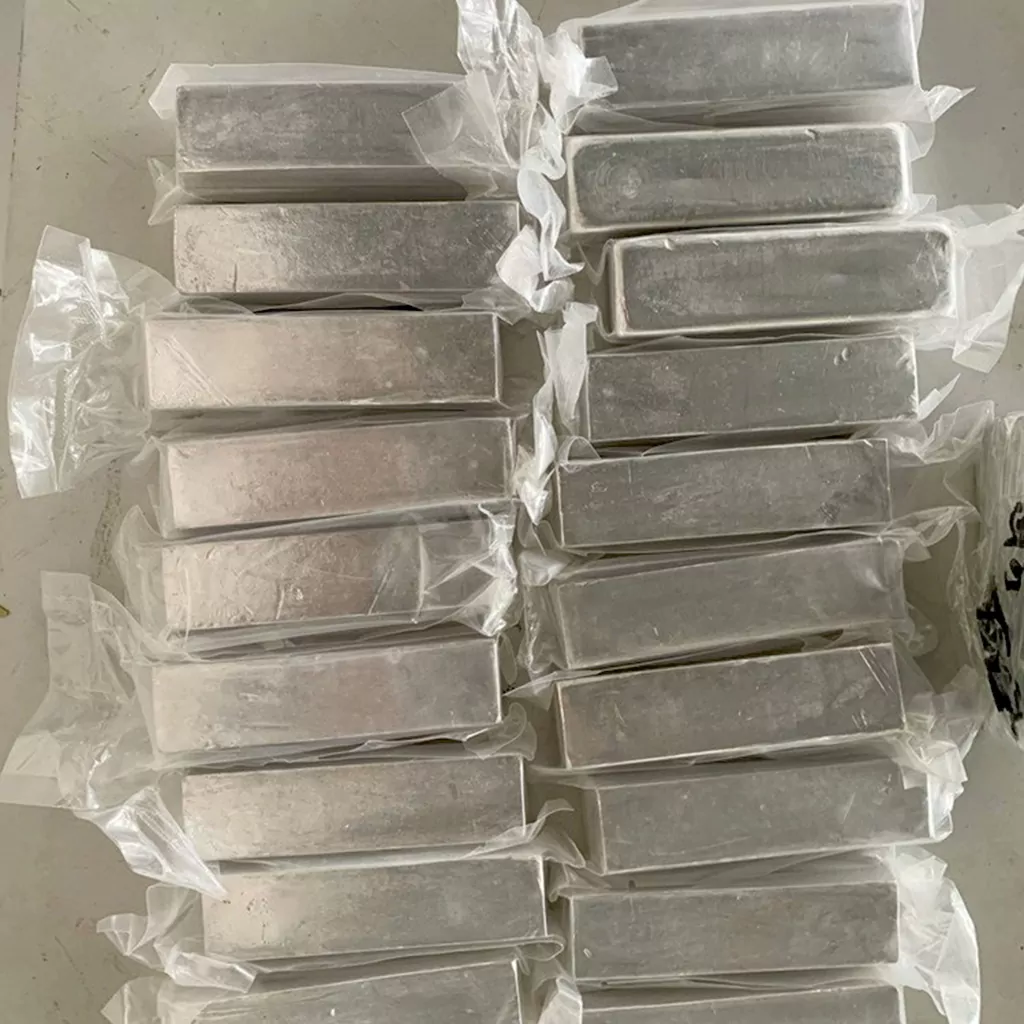
How to Extract and Use High Purity Tellurium
Dashuigou tellurium bismuth pyrite in Shimian county, Sichuan Province is the only primary tellurium deposit in the world so far.
Given the scarcity of resources, production of high purity tellurium is relatively small, with the United States, Canada, Peru, China and Russia supplying relatively large quantities of tellurium.
How to extract high purity Tellurium
Step 1, preparatory phase
A solution or ore containing tellurium is mixed with an extractant to form a mixture to be extracted.
Adjust the temperature, concentration and other parameters of the mixture as needed.
Step 2, extraction stage
The mixture is added to the rotor of the centrifugal extractor. Start the centrifugal extractor and make the rotor rotate at high speed.
The extractant forms a complex with tellurium in the process of rotation and separates under the action of centrifugal force gradually, then separates under the action of centrifugal force.
Step 3, collection phase
When the extraction process reaches a predetermined time or separation effect, the centrifugal extractor is stopped.
The extractant phase containing Te and the remaining ore or solution phase are discharged through the nozzle.
The extractant phase containing tellurium is further treated, such as back extraction and washing, to obtain high purity tellurium.
How to use high purity Tellurium
Semiconductor materials
Since high purity tellurium exhibits both N type and P type semiconductor properties, it is widely used in solar cells, semiconductor refrigeration and thermoelectric bismuth telluride as thermoelectric materials, mercury cadmium tellurium infrared materials, thin film field effect devices, etc.
In addition, high pure Te can also be used to manufacture photoresistors, photodiodes and other key components in optoelectronics.
Chemical industry
In the chemical industry, it is used as a catalyst and vulcanization agent for synthetic rubber, which can improve the production efficiency of rubber significantly, and enhance the heat resistance, corrosion resistance and mechanical strength of rubber.
Metallurgical industry
In the metallurgical industry, the addition of Te can enhance the machining performance of steel and improve the processing yield of stainless steel and low carbon steel.
it can also improve the corrosion resistance and fatigue resistance of lead, tin, copper and other metals.
In the glass ceramics industry, the special glass containing tellurium dioxide has the characteristics of high refractive index, low deformation, high density and infrared transparency, and is widely used in infrared optics.
Electronic and electrical industries
It is mainly used in photoreceptors, such as chromium mercury tellurium compounds are the main photosensitive materials used in infrared detectors for military and space systems.
Te can also be used to make components such as pyroelectric batteries, resistors and oscillators.
Medical domain
Tellurium compounds can be used to treat diseases such as cancer, diabetes and cardiovascular disease.
It is also used to make insecticides and fungicides, and to treat diseases such as hair loss and syphilis.
Leave a Comment
Top Categories
Hot Product
Tags
Related Blog
Welcome to our blog dedicated to the attractive world of rare metal materials.

How to Evaluate The Recent Situation of China Indium Metal
Market of China indium metal has been flat as a whole this week, with no volatility.

Affordable Bismuth Lead Alloys for Fishing Jig Manufacturing
Bismuth lead alloys offer a promising alternative to traditional materials in fishing jig manufacturing.
What is Pure Indium Used for?
Properties of pure Indium, including stability in air and water, excellent conductivity, and strong adhesion to glass, make it necessary in several high-tech applications.


