

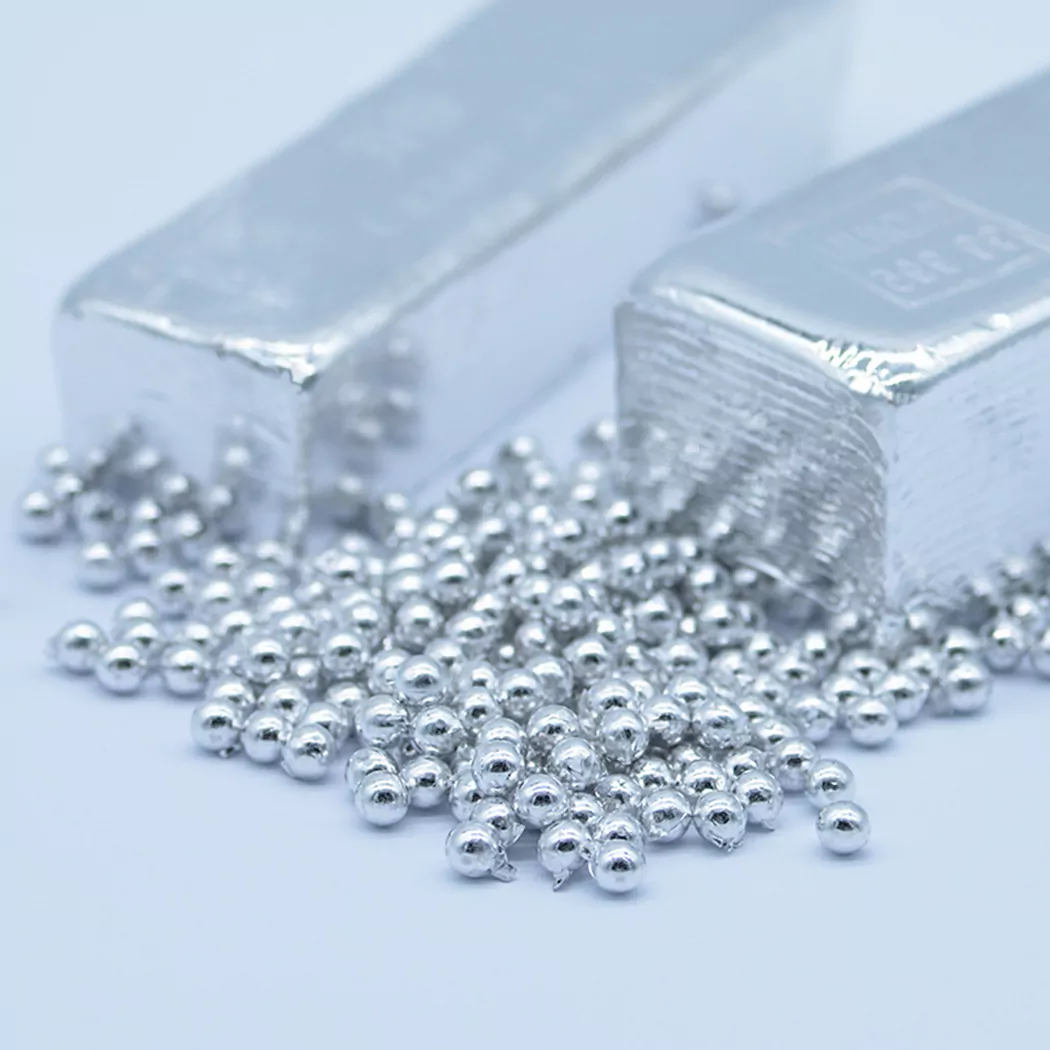
High Purity Tin Metal, the Element That Cries
It oxidizes easily, and when metallic tin is exposed to air, an invisible protective layer quickly forms on its surface; because of this, tin is used as a plating metal to protect other metals such as iron. However, because tin is not as active as iron, it is not an ideal material for protecting steel, and many tin-plated materials used for can packaging have been replaced by aluminum.
Tin metal has the interesting property of being able to cry. Due to the small friction coefficient of Sn, when the tin bar is bent, the friction between the grains of the tin crystals gives off a rattling sound like a break, known as the “tin sound”, which is similar to the sound of crying, and is therefore called the metal that cries.
However, if it is replaced with a tin alloy, it does not make this sound, and people use this property to identify whether a piece of metal is tin or not.
Tin metal has another interesting property: its alloy with copper, known as bronze, shrinks when heated and expands when cold.
The last interesting property of tin is low-temperature denaturation. At low temperatures, tin turns into powder. The reason for this is that low temperatures change the crystal structure of tin, causing it to expand dramatically in volume, turning the extremely flexible white tin into a loose gray tin like soot.
This reaction does not require the addition of other elements, and the crystal structure of tin changes as soon as the temperature falls below -13.2 degrees Celsius. But now scientists have found a way to prevent “tin plague” – mix some bismuth metals into tin, the extra electrons in the bismuth atoms can make the crystal structure of the tin atoms become stable, and no longer turn from white tin to gray tin. Bismuth is an effective treatment for tin plague, and it can prevent tin from becoming diseased.
In addition, tin has good corrosion resistance and is used in large quantities in the manufacture of alloys, such as tinplate, whose alloys have good corrosion resistance and mechanical properties, and therefore such alloys are used in the machinery manufacturing industry. High purity tin metals are widely used in the electronics industry, semiconductor industry and the manufacture of superconducting alloys.
Leave a Comment
Top Categories
Hot Product
Related Blog
Welcome to our blog dedicated to the attractive world of rare metal materials.

Holed Indium Foils Withstand Temperatures From -273 to 200°C
Recently, the special Indium R&D team of our Custom Metal Business Unit successfully broke through the key technical problems of the air-tight stability of the cooling indium foil at extremely cold temperatures and obtained customer verification.
3 Reasons Why Indium Prices Were Becoming Weak in These Days
Indium prices showed a declined and weak trend and the overall market performance was average in the past week.
Why Has Pure Bismuth Price Come Down in The Past Week
In the market, bismuth price experienced a obvious decline last week, according to the cost record sheet of our custom metal business unit.


